
The 12 Best Free Language Apps of 2025: Your Guide to Fluency
Discover the 12 best free language apps for 2025. Our detailed guide ranks top apps for vocab, conversation, and grammar to help you learn fast and free.


Learning a new language no longer requires expensive classes or stacks of textbooks. Today, the most powerful language-learning tools are already in your pocket. But with thousands of apps on the Google Play and Apple App Stores, finding the right one can feel more like a chore than the first step toward fluency. This guide is designed to solve that problem.
We have rigorously tested and analyzed the market to bring you a definitive list of the best free language apps available today. Instead of generic descriptions, we provide a practical breakdown of what each app does best, who it’s for, and its genuine limitations. This article is your shortcut to finding the perfect tool for your specific needs, whether you're a professional needing business English, a student preparing for an exam, or a newcomer looking to navigate daily conversations.
This comprehensive resource will help you:
- Identify the right app for your learning style, from gamified vocabulary builders to real-world conversation exchanges.
- Understand the pros and cons of each platform with honest, user-centered analysis.
- Compare key features to see which app aligns with your goals, be it speaking practice, grammar drills, or memory retention.
Each entry includes screenshots and direct download links to get you started immediately. We cut through the clutter to provide clear recommendations, helping you choose an app that will actually get you speaking a new language. Let’s find the perfect fit for your learning journey.
1. Duolingo
Best for: Gamified daily practice and beginners.
Duolingo has become a household name and for good reason. It’s arguably one of the best free language apps for beginners looking to build a foundational vocabulary and grammar base. Its game-like interface, featuring streaks, leaderboards, and experience points, makes daily learning feel less like a chore and more like a fun challenge. This design is highly effective for establishing a consistent practice habit, which is crucial in the early stages of language acquisition.
The platform offers a massive catalog of over 40 languages, all accessible through its completely free, ad-supported tier. Lessons are broken into bite-sized exercises that cover reading, writing, listening, and basic speaking. The user experience is polished and intuitive across its web, iOS, and Android versions, ensuring you can pick up where you left off on any device.
Core Features & User Experience
While the free version is robust, it does have limitations. Users will encounter ads and have a limited number of "hearts," or mistakes they can make before having to pause or practice to earn more. For those seeking deeper conversational skills, the structured, repetitive nature of the exercises might not be enough on its own. It's an excellent starting point, but should be supplemented with other methods for real-world fluency. For instance, after building a vocabulary base on Duolingo, using a dedicated English conversation practice app can significantly improve speaking confidence.
Key Information:
- Access: Free with ads; paid "Super" and "Max" tiers remove ads and add features.
- Platforms: Web, iOS, Android.
- Pros: Huge language selection, highly motivating gamified UX, strong community features.
- Cons: Free version has ads and limitations, can become repetitive for advanced learners.
2. Memrise
Best for: Real-world listening practice and vocabulary building with spaced repetition.
Memrise carves out its niche by moving beyond robotic audio and focusing on real-world context. It is one of the best free language apps for learners who want to understand how native speakers actually talk. The platform's core methodology is built around short video clips of native speakers, helping you connect words and phrases with authentic pronunciation, intonation, and even facial expressions. This makes it an excellent tool for bridging the gap between textbook learning and real-life comprehension.
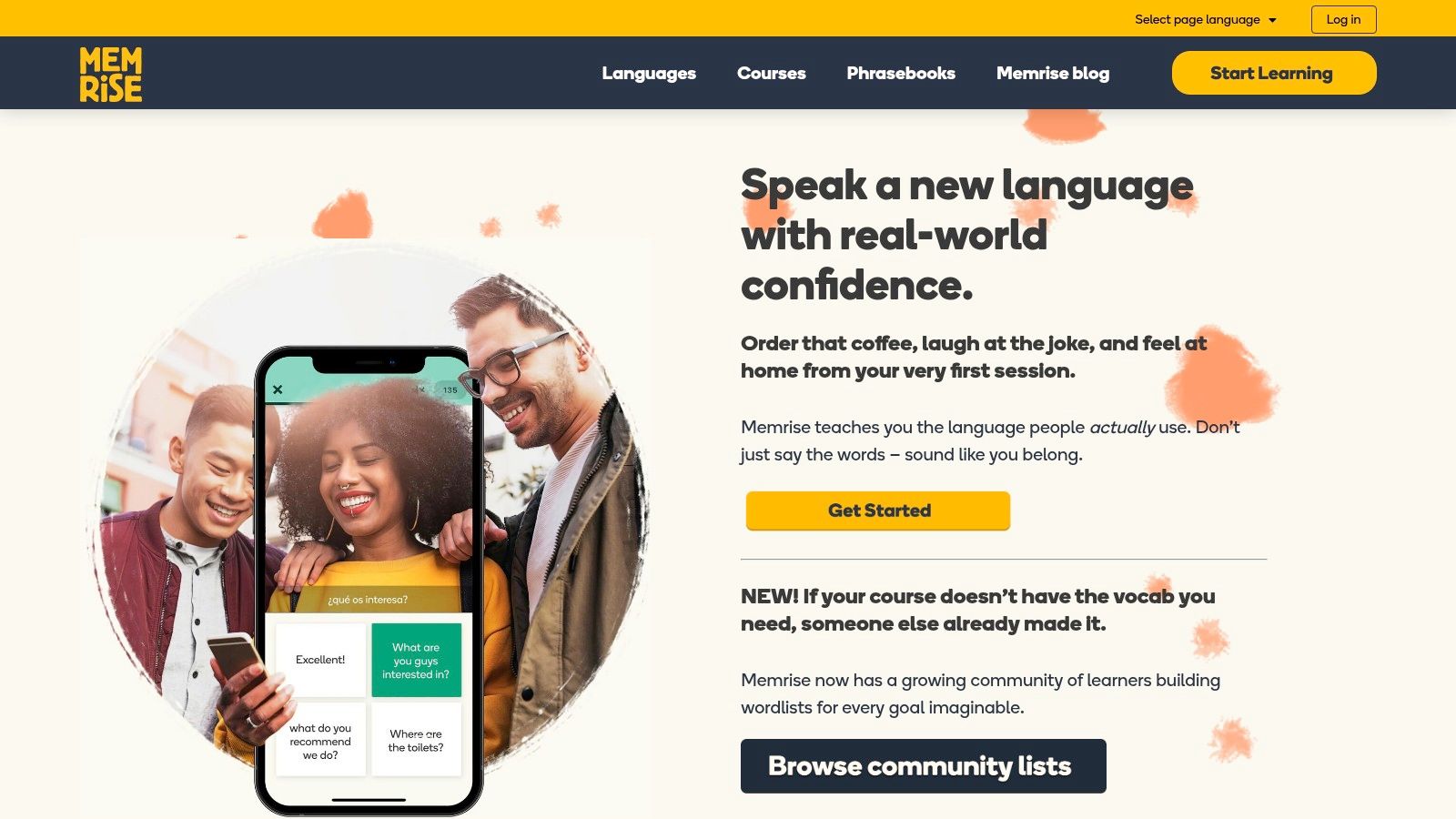
The app uses a smart spaced repetition system to help you memorize new vocabulary effectively, quizzing you just before you’re likely to forget. Its official courses provide a structured path from beginner to intermediate levels across a wide variety of languages. The interface is clean and engaging, making it easy to jump in for a quick session on your phone or computer.
Core Features & User Experience
The free version of Memrise offers access to the initial lessons of every official course, allowing users to get a solid feel for its learning method. However, to unlock all learning modes, including the listening and speaking practice features, a Pro subscription is necessary. While the official courses are well-curated, the quality of user-generated content can vary, so it's best to stick to the officially developed materials for a more reliable experience. Memrise excels at building listening skills, which can then be put into practice using a dedicated tool like a speaking practice app to build conversational fluency.
Key Information:
- Access: Free tier with limited access; paid "Pro" subscription unlocks all features.
- Platforms: Web, iOS, Android.
- Pros: Focus on real-world video content, effective spaced repetition system, engaging and modern interface.
- Cons: Core learning modes are behind a paywall, quality of community-created courses can be inconsistent.
3. Busuu
Best for: Structured learning and feedback from native speakers.
Busuu offers a unique blend of structured, expert-designed lessons and a vibrant community, positioning it as one of the best free language apps for learners who crave a clear path and real-human interaction. The platform’s courses are aligned with the Common European Framework of Reference (CEFR), giving you a tangible measure of your progress from A1 (beginner) to B2 (upper-intermediate). This makes it ideal for goal-oriented learners who want to ensure their study time is efficient and effective.
What truly sets Busuu apart is its community feature. You can submit speaking or writing exercises and receive corrections and feedback directly from native speakers. In turn, you can help others learning your native language. This reciprocal feedback loop provides invaluable, real-world practice that automated apps often lack, helping to bridge the gap between theoretical knowledge and practical application.
Core Features & User Experience
The free tier provides access to a selection of lessons and the community feedback feature in one language, which is a significant value. However, many core components, such as advanced grammar lessons, offline mode, and official CEFR-level certificates, are locked behind the Premium subscription. The user interface is clean and professional, focusing on a logical progression through the course material. While the free version is more limited than some competitors, its combination of structured curriculum and peer review offers a powerful learning experience for those serious about making measurable progress.
Key Information:
- Access: Free with limited features; paid "Premium" and "Premium Plus" tiers unlock full course content and features.
- Platforms: Web, iOS, Android.
- Pros: CEFR-aligned curriculum, community feedback from native speakers, clear study path.
- Cons: Free version is significantly restricted, some users report billing issues with in-app trial purchases.
4. Drops
Best for: Visual learners and rapid vocabulary acquisition.
If your primary goal is to quickly build a large vocabulary base, Drops offers a uniquely engaging and effective method. It stands out among the best free language apps by focusing almost exclusively on vocabulary through beautiful, minimalist illustrations and fast-paced, game-like exercises. The entire experience is designed around five-minute daily sessions, making it incredibly easy to form a consistent learning habit without feeling overwhelmed. This approach is perfect for supplementing a more comprehensive grammar or conversation-focused program.
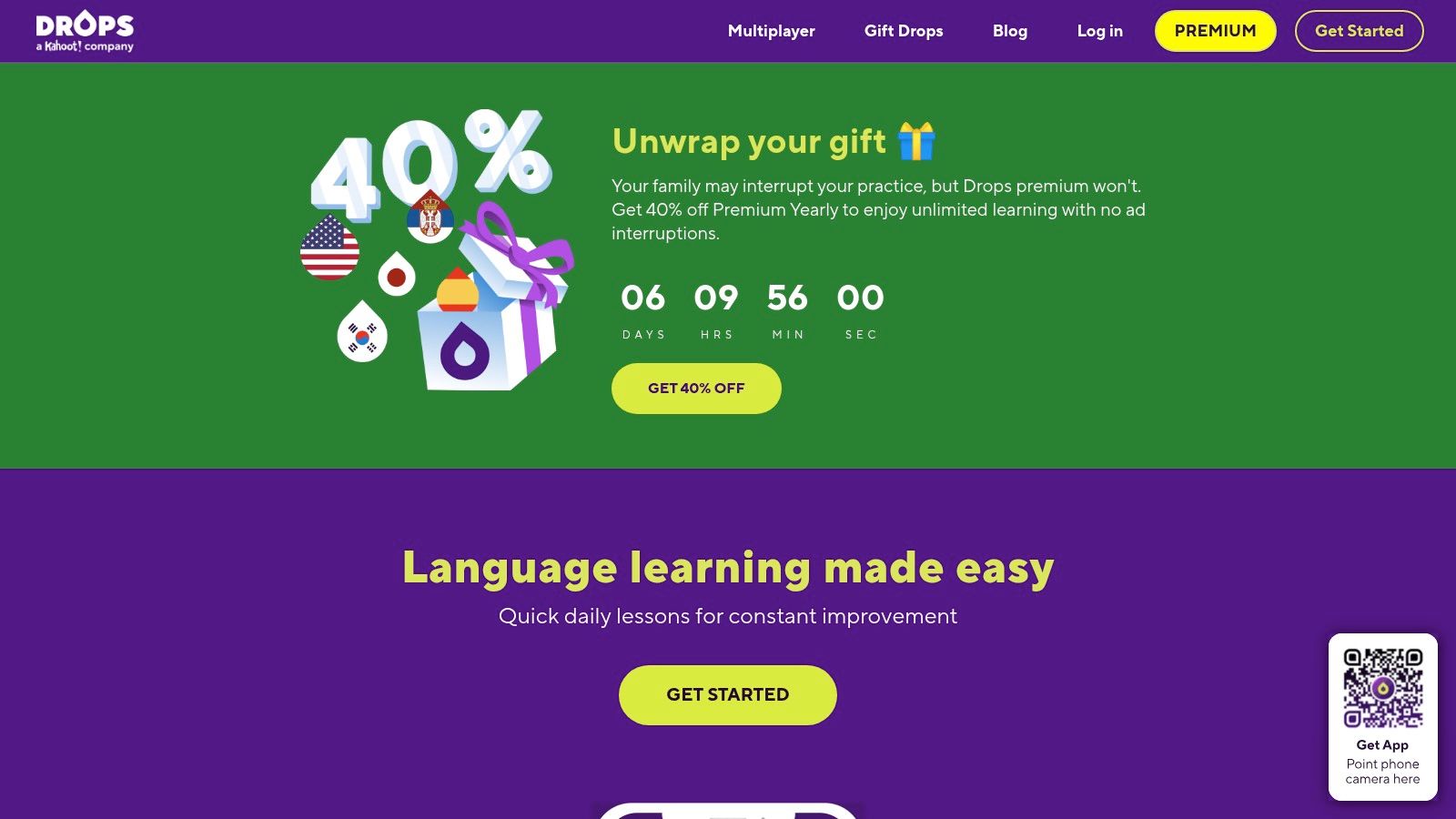
The app’s design is a major strength; it’s clean, intuitive, and uses a drag-and-drop mechanic that feels more like a fun puzzle than a study session. With over 50 languages available, including many less common ones, Drops provides a focused tool that excels at its specific purpose: drilling words into your long-term memory through visual association.
Core Features & User Experience
The core appeal of Drops lies in its simplicity and low friction. However, its strength is also its main limitation. The app intentionally avoids deep grammar explanations, sentence construction, or conversational practice. It is a powerful vocabulary builder, but it won't teach you how to string sentences together fluently. The free version restricts users to one five-minute session every ten hours, which encourages daily check-ins but can feel limiting for those wanting to study more intensively. It works best as a dedicated vocabulary booster alongside other learning methods.
Key Information:
- Access: Free with a 5-minute session limit every 10 hours; paid "Premium" tier unlocks unlimited time and all content.
- Platforms: Web, iOS, Android.
- Pros: Excellent for rapid vocabulary building, friendly low-friction design, large catalog including less common languages.
- Cons: Focuses primarily on vocabulary rather than grammar or conversation, free version has a strict time limit.
5. HelloTalk
Best for: Real-world conversation practice with native speakers.
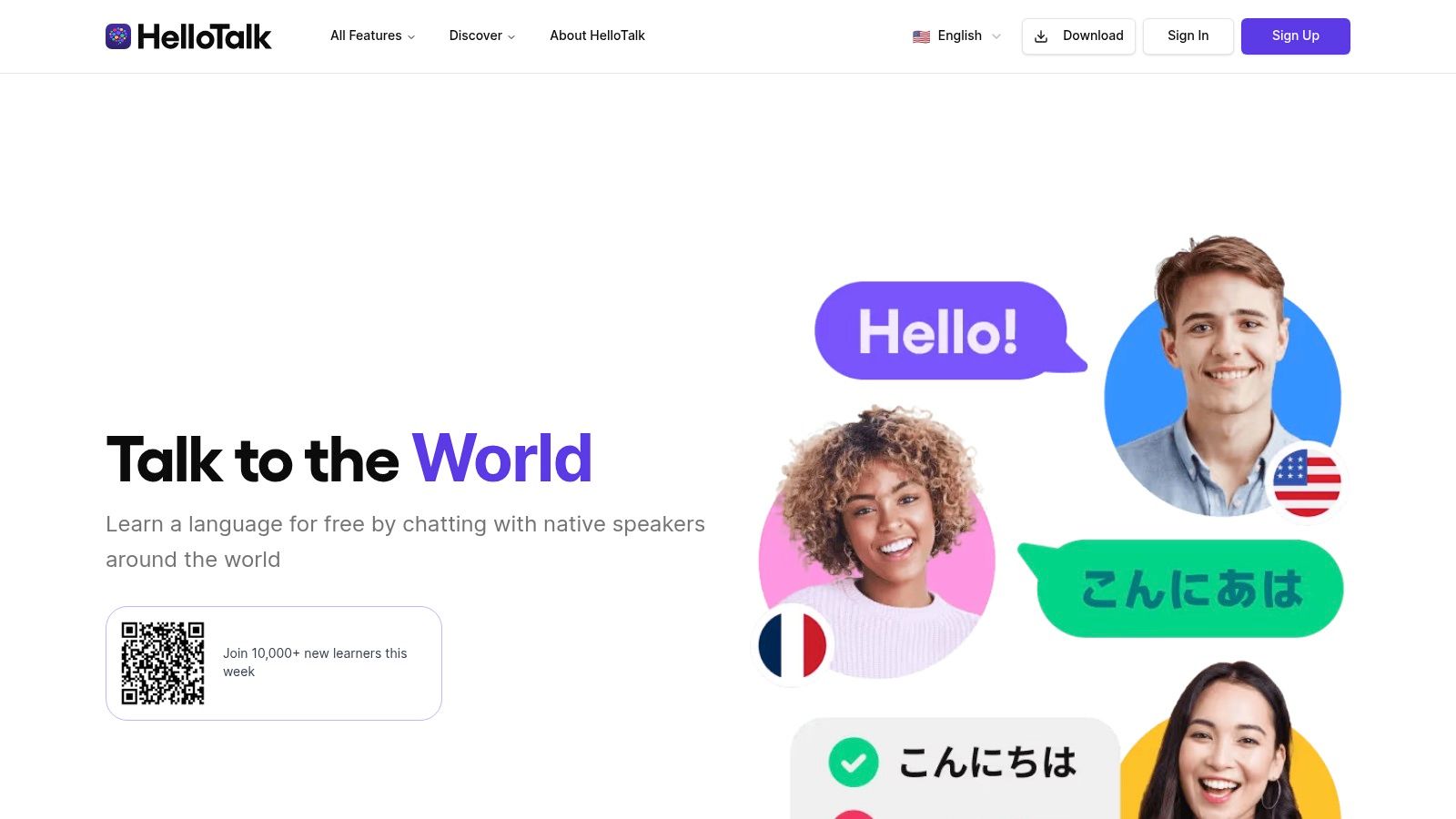
HelloTalk shifts the focus from solo drills to social interaction, positioning itself as one of the best free language apps for learners who want to dive into actual conversations. Instead of structured lessons, the platform connects you with a massive global community of native speakers for language exchange. You can find partners to practice with via text, voice messages, audio calls, or even video, creating an immersive environment to test your skills in real-time.
This social-first approach is fantastic for building conversational fluency and cultural understanding that apps like Duolingo might lack. It’s an ideal next step once you’ve learned some basic vocabulary and grammar and are ready to apply it.
Core Features & User Experience
HelloTalk's interface feels like a blend of a messaging app and a social network, complete with profiles, moments (like posts), and DMs. Built-in tools are incredibly helpful for navigating conversations; you can correct your partner's messages, get instant translations, and even hear the pronunciation of words. This integrated support system lowers the barrier to entry for beginners who might be nervous about making mistakes.
The free version is quite generous, allowing you to find partners and chat. However, the quality of exchange partners can be inconsistent, and some users treat it more like a social media app than a learning tool. The most useful features, such as unlimited translations and advanced partner filters, are locked behind a paid VIP subscription.
Key Information:
- Access: Free with limitations; paid "VIP" tier unlocks premium features.
- Platforms: iOS, Android.
- Pros: Direct practice with native speakers, huge global community, integrated translation and correction tools.
- Cons: Partner quality varies greatly, free version has limits, can feel more like a social app than a dedicated learning tool.
6. Tandem
Best for: Finding native speakers for real-world conversation practice.
Tandem is a language exchange app that connects you directly with native speakers from around the world. It’s one of the best free language apps for learners who have moved beyond basic vocabulary and want to apply their knowledge in authentic conversations. The platform facilitates a "tandem" learning model: you find a partner who is a native speaker of your target language and who wants to learn your native language, and you teach each other.
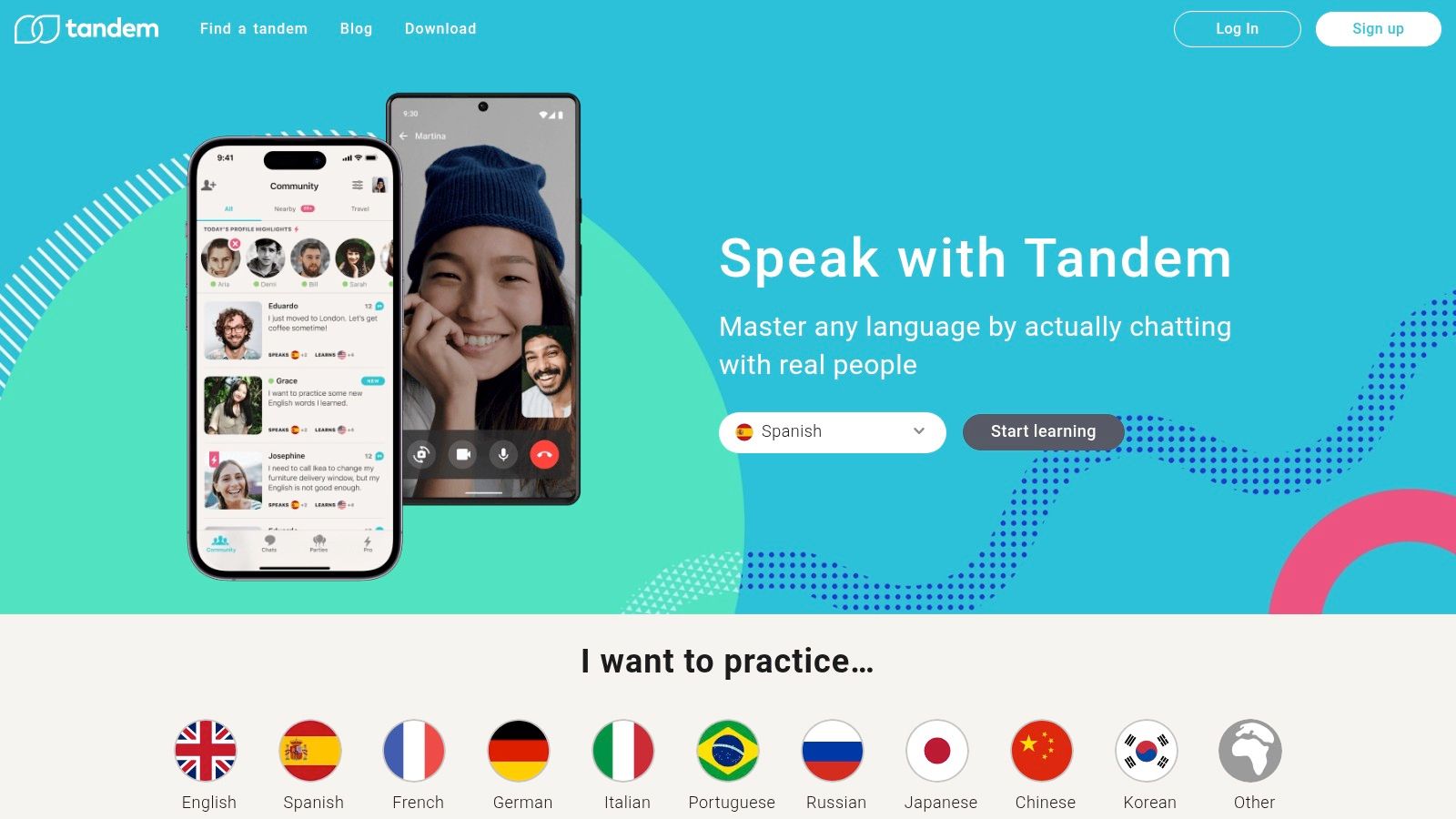
The app's strength lies in its community and its focus on safety, with profile verification and clear community guidelines. Users can connect via text, audio messages, and video calls, making it a flexible tool for practicing all aspects of communication. The free version provides all the core functionality needed to find partners and start chatting, which is a significant advantage for those on a budget.
Core Features & User Experience
Tandem's interface is clean and modern, resembling a social messaging app, which makes it intuitive to use. You can filter potential partners by language, location, and interests to find a good match. While the core experience is free, finding a consistent and reliable partner can sometimes require patience and effort. A "Pro" version removes ads, allows unlimited in-app translations, and offers profile visitor insights, but it is not essential for a productive experience.
Key Information:
- Access: Free with core features; optional "Pro" subscription unlocks advanced features.
- Platforms: Web, iOS, Android.
- Pros: Direct access to native speakers, strong safety and verification features, all essential chat tools are free.
- Cons: Finding a committed partner can be time-consuming, some search filters and unlimited translations are paywalled.
7. Clozemaster
Best for: Rapid vocabulary expansion in context for intermediate learners.
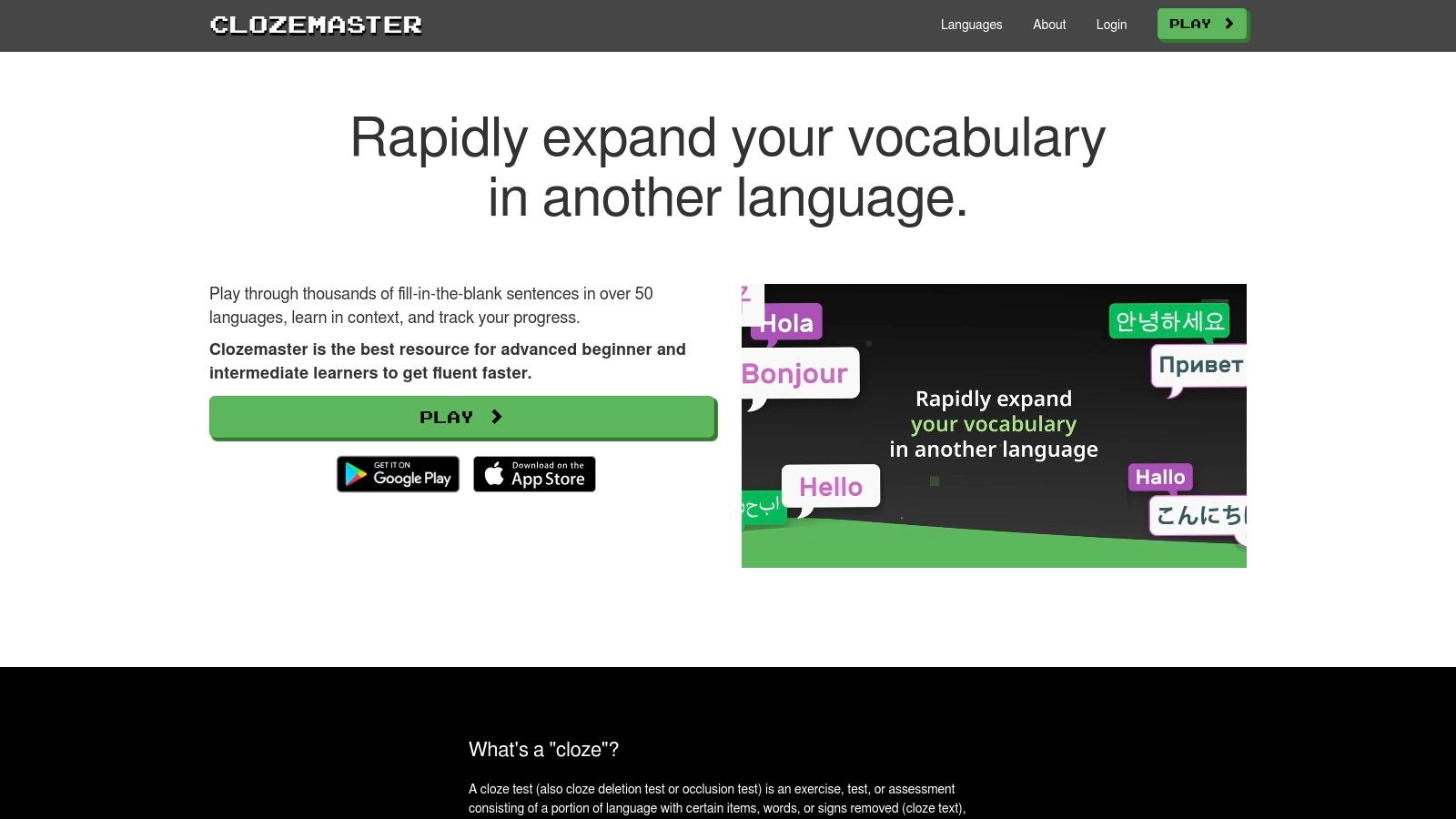
Once you’ve moved past the absolute beginner stage with an app like Duolingo, Clozemaster is the logical next step. It's one of the best free language apps designed to rapidly expand your vocabulary by presenting you with thousands of "fill-in-the-blank" sentences. This method, known as a cloze test, forces you to understand words in their natural context, which is far more effective for retention and usage than memorizing isolated flashcards.
The platform uses sentences sourced from real-world media, sorted by word frequency, so you learn the most common words first. This gamified, high-volume approach helps you internalize grammar and sentence structures almost subconsciously. It's an excellent tool for breaking through the intermediate plateau where vocabulary acquisition often slows down.
Core Features & User Experience
Clozemaster’s interface is intentionally simple and retro-themed, focusing entirely on the core drill experience. You can choose to type the missing word or select from multiple-choice options. The free tier is incredibly generous, providing access to the main sentence-filling game for its vast library of over 50 languages. While it doesn't offer structured lessons on grammar rules, its repetitive, context-based exposure is a powerful learning mechanic.
For learners who feel stuck after mastering basic vocabulary, this platform offers a clear path forward. It builds the crucial bridge between knowing individual words and understanding how to use them fluently in sentences, a skill vital for real conversations.
Key Information:
- Access: Free with core features; paid "Pro" tier adds advanced features, offline mode, and enhanced stats.
- Platforms: Web, iOS, Android.
- Pros: Excellent for contextual vocabulary building, massive sentence library, generous free version.
- Cons: Not suitable for complete beginners, repetitive drill-based format isn't a complete learning solution.
8. Mango Languages
Best for: Practical, real-world conversations and library-sponsored access.
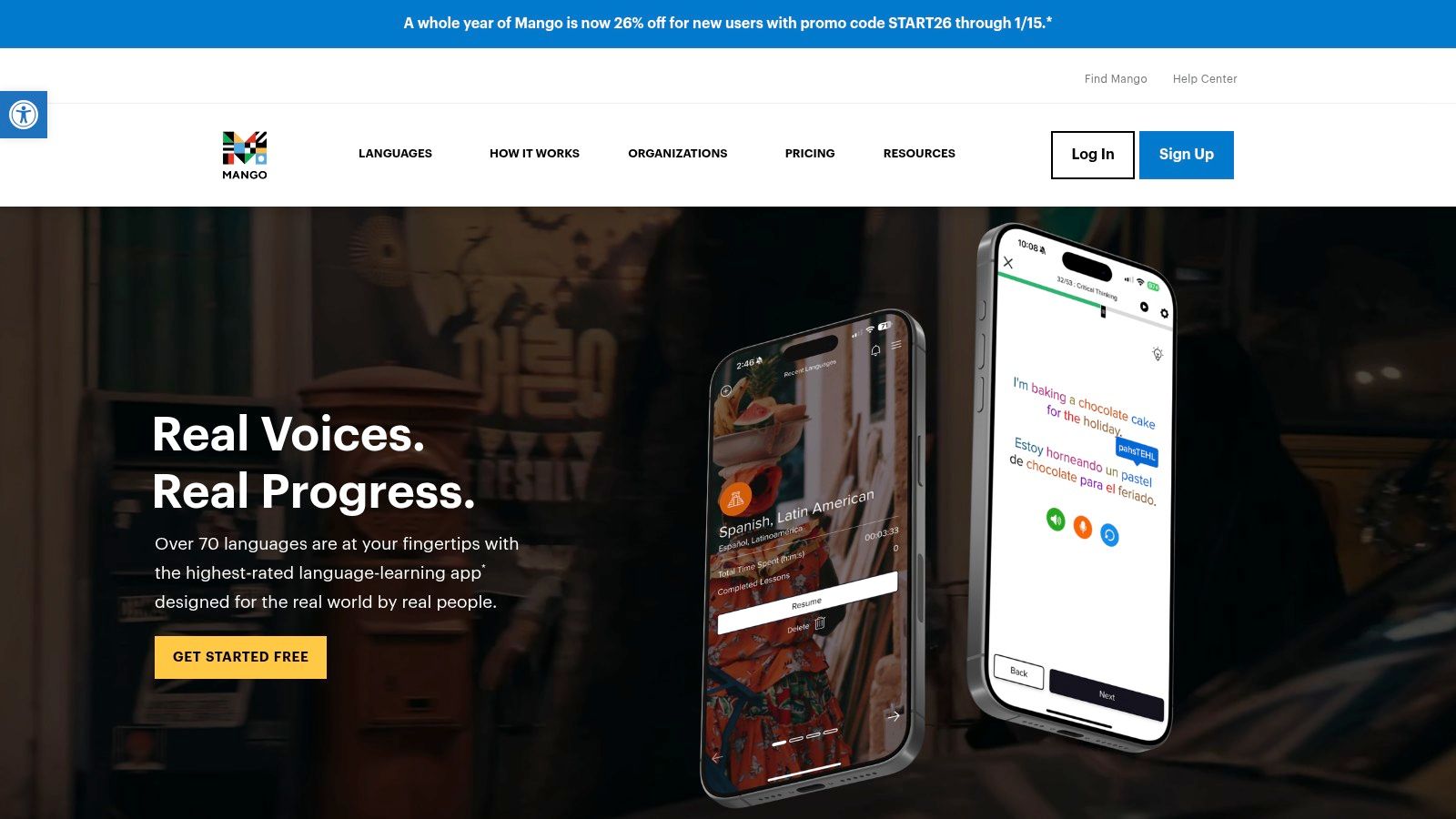
Mango Languages offers a unique proposition: a premium, structured learning experience that is often completely free. How? Many public libraries, particularly in the U.S., provide full access to their patrons. This makes it one of the best free language apps for learners who want a comprehensive course without a direct subscription. The platform focuses on practical, conversation-based lessons that are immediately useful for real-life situations like ordering food, asking for directions, or making introductions.
The courses are built around conversational goals and include color-coded grammar notes, cultural insights, and a voice-comparison tool to help you perfect your pronunciation. This method is excellent for busy adults who need to learn functional phrases quickly rather than getting bogged down in abstract grammar rules.
Core Features & User Experience
The user experience is clean, straightforward, and focused on a linear learning path. Each lesson builds logically on the last, ensuring you develop a solid foundation. Its "Find Mango" tool on the website is a key feature, allowing you to instantly check if your local library offers free access. While the feature set isn't as expansive as some gamified apps, its strength lies in its effective, no-nonsense approach to teaching conversational skills. The inclusion of cultural notes provides crucial context that other apps often overlook, helping you understand not just what to say, but why you say it.
Key Information:
- Access: Free with a participating library or institutional membership; paid individual subscriptions available.
- Platforms: Web, iOS, Android.
- Pros: Strong focus on real-life phrases, excellent value when free via libraries, includes valuable cultural notes.
- Cons: Requires a subscription if not available through an institution, smaller feature set than some competitors.
9. Anki (AnkiWeb / AnkiMobile / AnkiDroid)
Best for: Supercharging vocabulary retention and mastering scripts.
Anki is not a language course but a powerful, highly customizable flashcard system. It is the gold standard for learners who want to ensure new words, phrases, or characters stick in their long-term memory. Using a sophisticated Spaced Repetition System (SRS) algorithm, Anki shows you flashcards just before you're about to forget them, making your study sessions incredibly efficient. It's an indispensable tool to complement any primary language app.
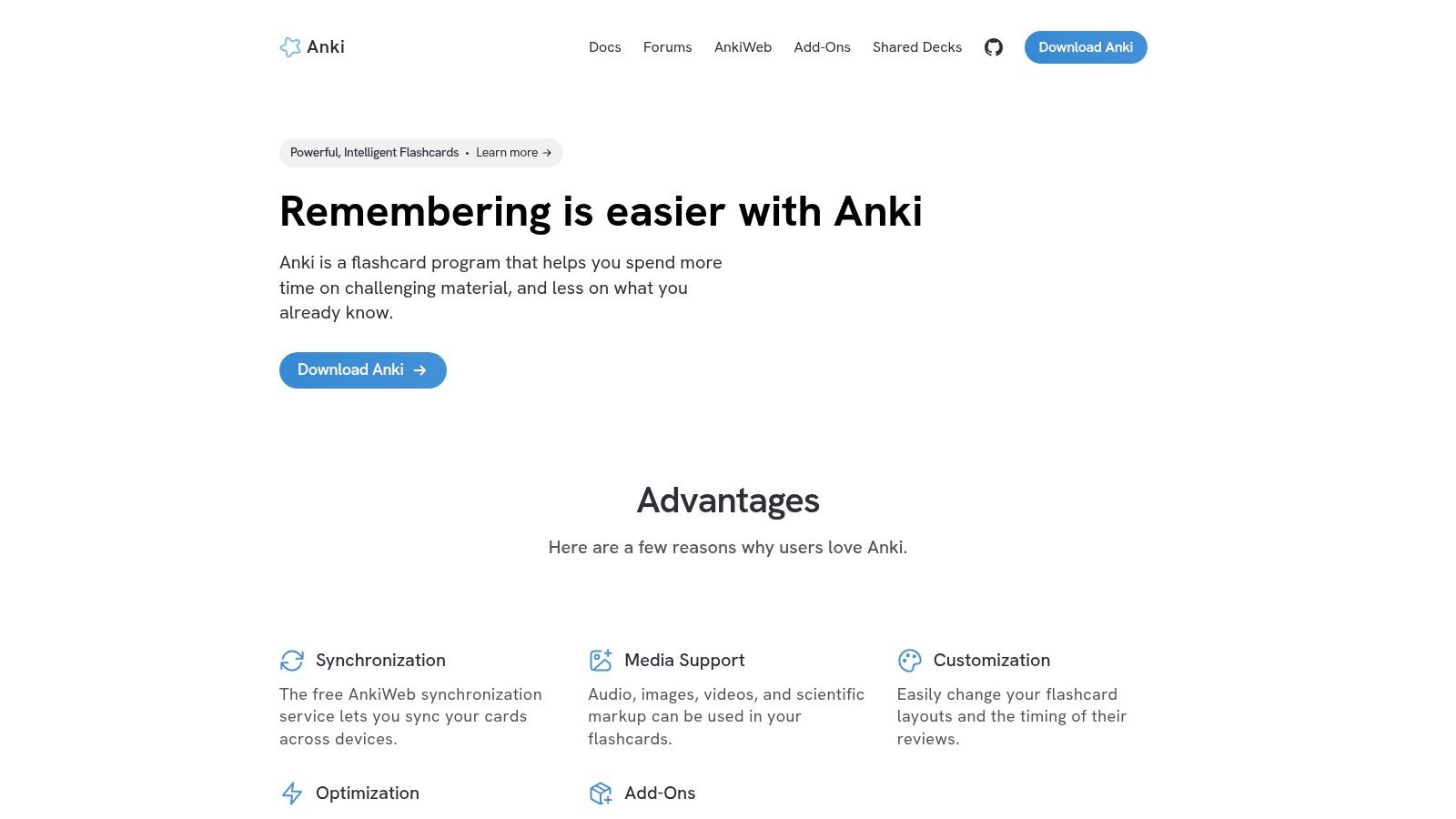
While many other best free language apps teach you the content, Anki ensures you never forget it. Users can create their own highly detailed flashcards (with audio, images, and cloze deletions) or download from thousands of high-quality, pre-made decks shared by the community. For users leveraging tools like Anki to retain vocabulary and grammar effectively, you might also be interested to explore strategies for personal knowledge management that can further enhance your learning efficiency.
Core Features & User Experience
Anki’s power lies in its flexibility, but this comes with a steeper learning curve than most plug-and-play apps. The user interface is more functional than flashy, prioritizing customization over aesthetics. Getting started requires a bit of a DIY attitude, but the payoff for memorization is unmatched. It’s perfect for serious students building custom study routines for exams or dedicated learners tackling difficult writing systems like Japanese Kanji or Chinese Hanzi.
Key Information:
- Access: Free on Desktop (Windows/Mac/Linux), Web, and Android (AnkiDroid). The official iOS app is a one-time paid purchase.
- Platforms: Web, iOS, Android, Desktop.
- Pros: Best-in-class SRS for memory efficiency, highly customizable cards and decks, free on most major platforms.
- Cons: Steeper learning curve, requires manual setup, official iOS app is not free.
10. Apple App Store (iOS/iPadOS) – Language Learning Apps
Best for: Discovering and securely managing a vast library of language apps on Apple devices.
While not a learning app itself, the Apple App Store is an essential gateway for iPhone and iPad users to find the best free language apps available. It functions as a trusted, curated marketplace where you can explore, compare, and safely install everything from Duolingo to specialized niche tools. Its strength lies in its ecosystem: centralized billing, automatic updates, and user reviews provide a secure and streamlined experience for managing your language learning toolkit.
The App Store simplifies the discovery process with editorial collections and categorized charts, often highlighting new or effective language learning platforms. Each app page offers a quick overview with user ratings, screenshots, and detailed information about in-app purchases or subscription costs. This transparency helps you make informed decisions before downloading and centralizes all your subscriptions, making them easy to track and cancel.
Core Features & User Experience
Navigating the App Store is intuitive, with powerful search functions and personalized recommendations. Users benefit from Apple's strict security and privacy standards, ensuring that app downloads are safe. One key consideration is that pricing for subscriptions or premium features may sometimes be higher through the App Store compared to purchasing directly from a developer's website due to Apple's commission fees. However, the convenience of consolidated management and trusted payment processing often outweighs the minor price difference for many users.
Key Information:
- Access: Free to browse and download free apps; in-app purchases and subscriptions are managed via your Apple ID.
- Platforms: iOS, iPadOS.
- Pros: Trusted and secure distribution, consolidated subscription management, user reviews and ratings help in app selection.
- Cons: App prices or subscription costs can be higher than on the web, some feature details are only clear after download.
11. Google Play Store (Android) – Language Learning Apps
Best for: Discovering niche apps and managing your learning toolkit on Android.
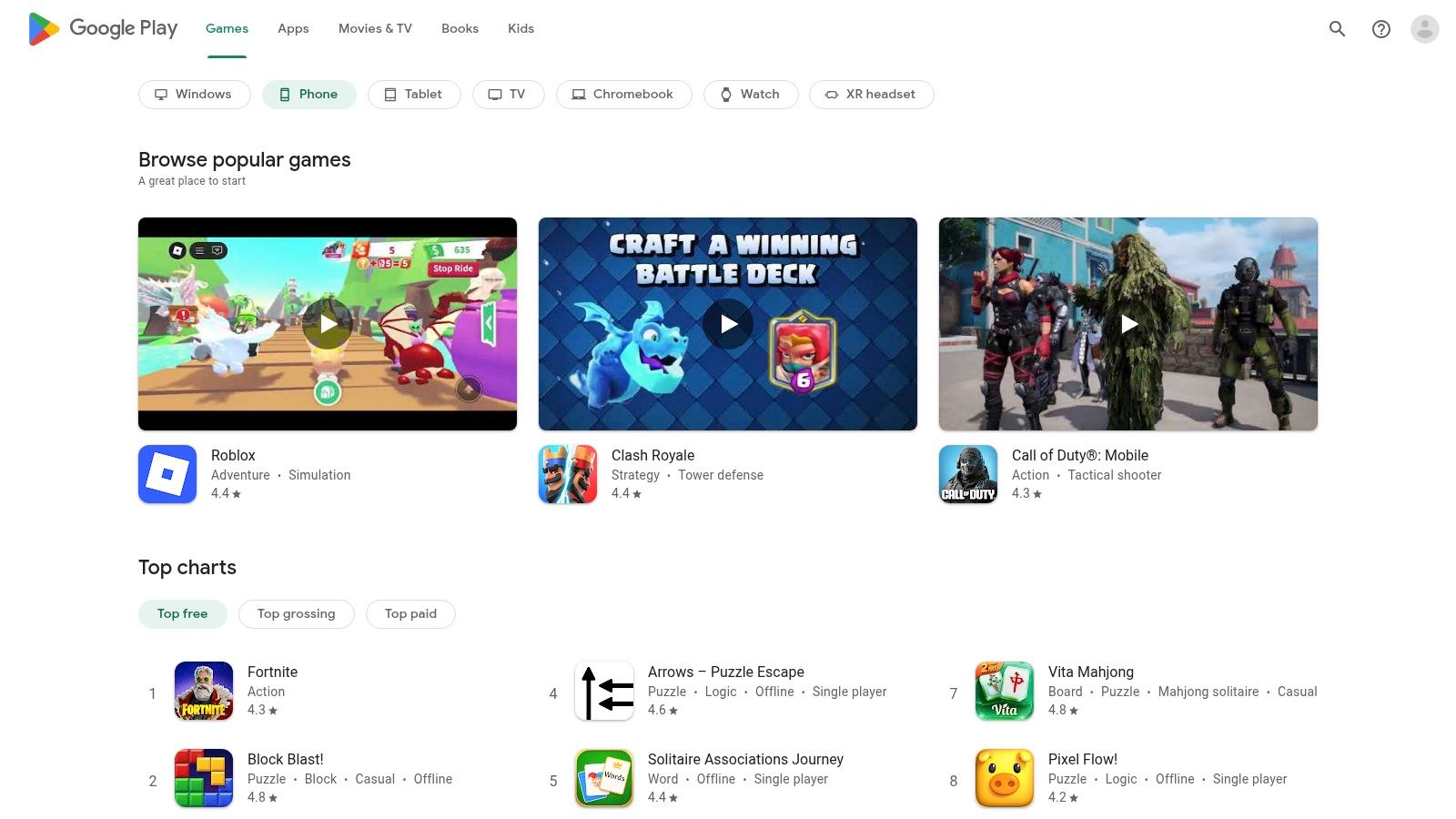
While not a learning app itself, the Google Play Store is the essential gateway for any Android user searching for the best free language apps. It functions as a massive, searchable library where you can discover everything from household names to specialized apps for learning less common languages. Its curated collections and user-driven rating system help you sift through the options to find high-quality tools that fit your specific learning style and goals.
The platform provides transparency by showing user reviews, download counts, and last-updated dates, which helps you avoid abandoned or poor-quality apps. For learners, it's the ultimate starting point to build a customized suite of applications, combining a primary curriculum app with tools for vocabulary, grammar, and speaking practice.
Core Features & User Experience
The primary advantage of the Play Store is its sheer volume and variety. You can find apps tailored for specific dialects, professional vocabulary, or even learning through music and games. The downside is that quality can vary significantly, requiring you to read reviews carefully. It's an indispensable resource for discovering tools, but the learning experience depends entirely on the apps you choose to download. For example, after finding a good grammar app, you might search for ways to practice English speaking online for free to round out your skills.
Key Information:
- Access: Free to browse and install free/freemium apps.
- Platforms: Web, Android, Chromebooks.
- Pros: Enormous selection of apps, transparent user ratings and reviews, often includes niche or regional language apps.
- Cons: Quality varies widely across the catalog, app availability can be region-specific.
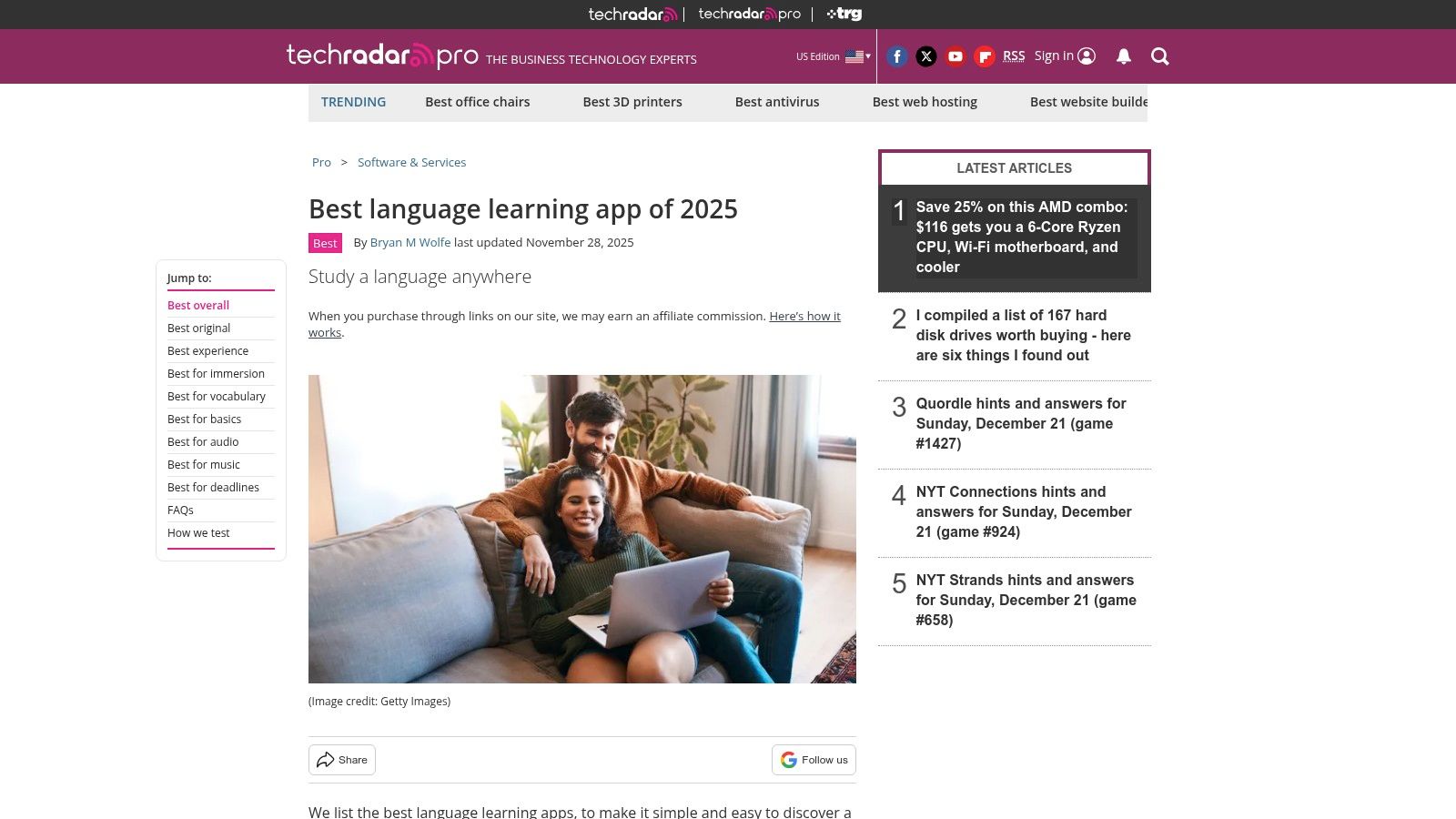
12. TechRadar – Best Language Learning Apps (comparison guide)
Best for: Comparing app features before you commit.
Sometimes the biggest challenge isn't learning the language, but choosing the right tool to start with. TechRadar's annually updated guide to the best free language apps serves as a powerful meta-resource, saving you the time of downloading and testing a dozen different platforms. It offers an independent, editorial overview that breaks down the major players by their core strengths, such as "best for vocabulary" or "best for grammar," allowing you to align an app's features with your specific learning goals from the outset.
This guide is invaluable for learners who feel overwhelmed by choice. Instead of a direct learning tool, it’s a strategic first step that helps you make an informed decision. The side-by-side comparisons and clear categorization provide a bird's-eye view of the landscape, highlighting which apps offer robust free tiers and what you can expect from their premium versions.
Core Features & User Experience
TechRadar’s strength is its clear, concise analysis. The article lays out the pros, cons, and pricing structures of popular apps like Duolingo, Memrise, and Busuu in a scannable format. This allows you to quickly assess whether an app's teaching style, such as gamification versus immersion, is the right fit for you before investing any time in it.
While the guide is comprehensive, it primarily focuses on mainstream apps, so you might not discover lesser-known or niche platforms. Additionally, since apps update their features and pricing frequently, some minor details in the guide could lag slightly behind real-time changes. However, for a foundational understanding of what each major app offers, it remains an excellent and highly efficient starting point.
Key Information:
- Access: Free to read on the TechRadar website.
- Platforms: Web.
- Pros: Time-saving overview of top apps, clear category recommendations, independent comparison of features and pricing.
- Cons: Doesn't cover all niche apps, some details may become outdated as apps evolve.
Top 12 Free Language Apps Comparison
| App / Resource | ✨ Core focus / features | ★ UX / quality | 💰 Price / value | 👥 Target audience | 🏆 Unique strength |
|---|---|---|---|---|---|
| Duolingo | Gamified bite‑size lessons; basic AI convo | ★★★★☆ | 💰 Free + Super/Max | 👥 Beginners, casual daily learners | Largest catalog & engagement |
| Memrise | Native‑speaker clips; AI coach for speaking | ★★★★☆ | 💰 Free + Pro | 👥 Beginners → intermediate; audio learners | Real‑world listening focus |
| Busuu | CEFR‑aligned courses; community corrections | ★★★★ | 💰 Free + Premium | 👥 Goal‑oriented learners, exam prep | Structured study plans & feedback |
| Drops | Visual, gamey vocab drills; 5‑min sessions | ★★★★ | 💰 Free (time limit) + Premium | 👥 Busy users needing vocab boosts | Rapid vocabulary building |
| HelloTalk | Text/voice/video exchange; built‑in translations | ★★★★ | 💰 Free + VIP | 👥 Learners seeking real conversation partners | Massive language exchange community |
| Tandem | Partner matching; verification & safety features | ★★★★ | 💰 Free core + Pro | 👥 Those wanting sustained language partners | Quality matching & safety |
| Clozemaster | Sentence cloze SRS; listening & speaking modes | ★★★★ | 💰 Free + Pro for stats | 👥 Post‑beginner learners expanding context vocab | Frequency‑based sentence exposure |
| Mango Languages | Conversation phrases + culture & pronunciation | ★★★★ | 💰 Subscription; often free via libraries | 👥 Adults, travelers, library users | Excellent library‑access value |
| Anki (AnkiWeb/Mobile) | Highly customizable spaced‑repetition SRS | ★★★★★ | 💰 Free (desktop/Android/web); iOS paid | 👥 Serious learners, memorization focus | Best‑in‑class SRS efficiency |
| Apple App Store | Curated listings, reviews, centralized billing | ★★★★ | 💰 Free to browse; in‑app purchases via Apple | 👥 iOS users, families | Trusted distribution & subscription management |
| Google Play Store | Large catalog, app details, regional choices | ★★★★ | 💰 Free/paid apps; regional pricing | 👥 Android users, broad regions | Broad app selection & discovery |
| TechRadar (guide) | Editorial comparisons & category recommendations | ★★★★ | 💰 Free editorial guide | 👥 Deciders choosing the right app | Curated side‑by‑side recommendations |
Ready to Speak? Go Beyond Drills with AI Conversation Practice
The journey to fluency is a marathon, not a sprint, and the tools you choose are your most critical gear. Throughout this guide, we’ve explored the landscape of the best free language apps, uncovering how platforms like Duolingo and Busuu build your grammar foundation, while tools like Memrise and Anki supercharge your vocabulary retention. We've seen how community-based apps such as HelloTalk and Tandem open the door to real-world interaction, giving you a priceless opportunity to connect with native speakers.
Each app offers a unique strength. Your ideal starting point depends entirely on your personal learning style and immediate goals. Are you a busy professional needing to quickly grasp industry-specific vocabulary? Drops or Memrise might be your best bet for those crucial first words. Are you an immigrant looking to understand and participate in daily community conversations? A combination of Busuu for structured lessons and Tandem for casual practice could be the perfect blend. The key is to recognize that no single free app is a complete solution.
From Passive Knowledge to Active Confidence
The most significant takeaway is this: free apps are exceptionally good at helping you acquire passive knowledge. You can learn hundreds of words, master complex verb conjugations, and understand grammatical structures without spending a dime. However, the ultimate goal for most learners is not just to know a language, but to use it confidently in real-time, dynamic situations. This is where many free tools reach their functional limit.
Flashcards can’t prepare you for the hesitation of a real conversation. Grammar drills won’t teach you how to rephrase a sentence when you’re put on the spot in a business meeting. This is the crucial gap between passive learning and active speaking, and bridging it requires a different kind of practice, one focused on production, not just recognition. True fluency is built when you start speaking, making mistakes, and receiving immediate, corrective feedback that helps you improve.
The Next Step: Activating Your Skills with AI
This is where modern technology offers a powerful solution. The limitation of most apps is their inability to simulate the unpredictable nature of human dialogue and provide nuanced feedback on your spoken output. Advanced tools are now leveraging sophisticated artificial intelligence to create these practice environments. To understand the artificial intelligence behind these advanced conversational tools, you might want to explore Natural Language Processing (NLP), which is the technology that allows computers to understand and respond to human speech.
These AI-powered partners are designed to fill the conversational void left by traditional apps. They provide a safe, judgment-free space to practice speaking 24/7. For learners who are ready to move beyond rote memorization and start building real conversational muscle, this technology is a game-changer. It’s the essential next step that transforms your accumulated vocabulary and grammar knowledge into the confident, natural speech needed for job interviews, customer interactions, and meaningful personal connections. The best free language apps build your foundation; dedicated conversation practice builds your voice.
Ready to turn your hard-earned knowledge into confident conversation? While the free apps on this list are excellent for building a foundation, TalkEasy is your dedicated AI partner for mastering spoken English. Start practicing real-world conversations and get instant feedback in just 15 minutes a day by visiting TalkEasy.