
10 Essential Retail Sales Associate Skills to Master in 2025
Level up your career with our guide to the top 10 retail sales associate skills. Learn communication, sales, and service with actionable tips.


In the competitive world of retail, success is about more than just showing up. It's built on a foundation of specific, powerful abilities that turn casual shoppers into loyal customers. The most effective retail sales associates are master communicators, problem-solvers, and brand ambassadors all in one. Developing strong retail sales associate skills is not just about meeting sales targets; it's about creating positive experiences that build brand loyalty and drive long-term business growth. To fully grasp the landscape for retail sales associates and their potential, consider exploring the broader context of the retail industry to understand the challenges and opportunities ahead.
This guide moves beyond generic advice to provide a practical, scannable list of the 10 essential skills you need to not only succeed but thrive. For each skill, you'll find:
- Actionable insights to improve your performance.
- Resume-ready bullet points to showcase your expertise.
- Interview answer examples to help you land the job.
- Short speaking prompts you can practice on-demand with an AI tutor like TalkEasy.
Whether you're just starting your career or aiming for a leadership role, mastering these core competencies is the key to unlocking your full potential and standing out in any retail environment. Let's dive into the skills that will set you apart on the sales floor.
1. Customer Communication & Active Listening
Effective communication is the cornerstone of all essential retail sales associate skills, and it begins not with speaking, but with listening. Active listening is the practice of fully concentrating on what a customer is saying, understanding their message, and responding thoughtfully. This foundational skill allows you to move beyond a simple transaction to build genuine rapport, accurately identify customer needs, and provide solutions that lead to satisfaction and loyalty. When you truly hear a customer, you can turn a vague request into a successful sale.

For instance, a customer might vaguely mention they need "something for a party." A passive listener might point to the dress section. An active listener asks clarifying, open-ended questions like, "Tell me a bit about this party. What's the occasion?" This approach could reveal the customer is attending an important job interview, not a casual get-together, completely changing the recommended products. This deeper engagement transforms your role from a simple clerk to a trusted advisor.
How to Improve Active Listening
This skill is crucial when interacting with a diverse customer base, including those with different accents or communication styles. The goal is to make every customer feel heard and respected.
- Pause and Clarify: Before offering a solution, repeat the customer’s needs back to them. For example, say, "So, if I'm understanding correctly, you're looking for a durable, waterproof jacket for hiking?"
- Ask Open-Ended Questions: Use questions that start with 'What,' 'How,' or 'Tell me about...' to encourage customers to share more details.
- Focus on Non-Verbal Cues: Pay attention to a customer's tone of voice and body language to understand their emotions and true needs, not just their words.
- Practice Consistently: Use tools like TalkEasy to practice real-world retail scenarios. Daily 15-minute sessions can build your confidence in understanding various accents and common customer phrases, making you a more effective communicator.
2. Product Knowledge & Technical Fluency
Beyond friendly service, one of the most vital retail sales associate skills is a deep understanding of the products you sell. Product knowledge involves knowing the features, benefits, pricing, and specific use cases for your store’s inventory. This expertise, combined with the technical fluency to explain complex details simply and clearly, builds customer trust and positions you as a credible expert. Confidently articulating product value and answering technical questions turns hesitant shoppers into confident buyers.
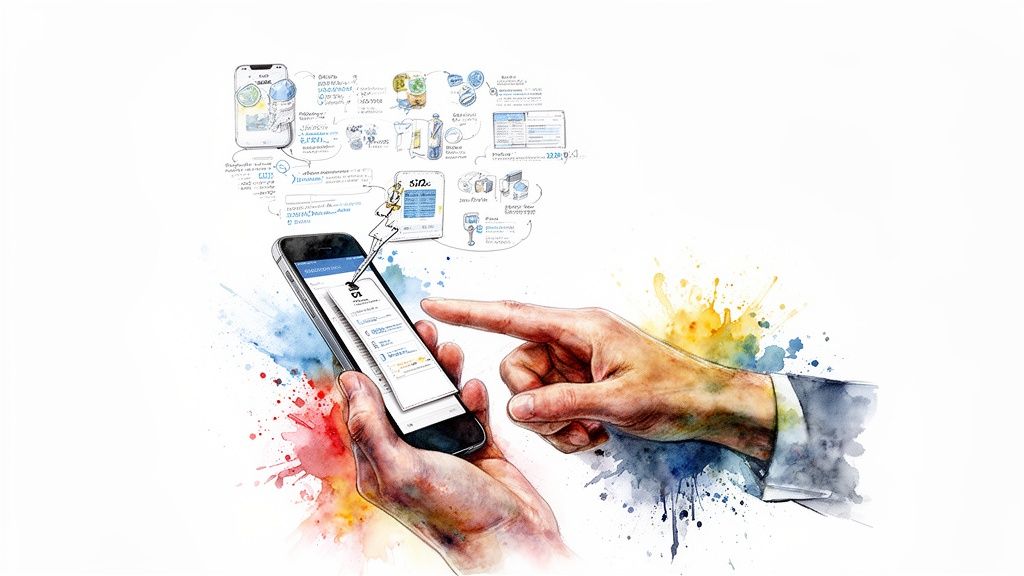
For example, a customer at an electronics store might ask about the difference between two smartphones. An associate with strong product knowledge can go beyond reading specs from a tag. They can explain how a faster processor impacts gaming performance or how a specific camera sensor improves low-light photos, tailoring the explanation to the customer’s stated interests. This level of detail, delivered in conversational English, makes the benefits tangible and helps the customer feel secure in their purchasing decision.
How to Improve Product Knowledge
This skill is essential for building authority and helping customers make informed choices. The goal is to translate technical specifications into real-world benefits that resonate with each shopper.
- Study and Summarize: Read product manuals and marketing materials, then practice summarizing the key selling points in your own words, avoiding jargon.
- Use Role-Play Scenarios: Practice explaining your store's specific products using custom conversation features. For instance, you could simulate a customer asking about organic food sourcing or skincare ingredients.
- Simplify Technical Language: Learn how to break down complex features for customers who aren't experts. Instead of saying "it has an octa-core processor," you could say "it’s incredibly fast, so apps and games run smoothly without any lag."
- Practice with Technology: Use tools like TalkEasy to role-play scenarios where you have to answer technical questions under pressure. This helps build confidence and fluency, especially for non-native English speakers learning industry-specific vocabulary.
3. Sales Techniques & Persuasive Communication
Beyond basic customer service, mastering sales techniques is what separates a good associate from a great one. This skill involves strategically guiding customers toward a purchase by understanding their underlying needs and using persuasive language, not pressure. It's about consultative selling, where you act as an expert advisor who helps solve a problem, rather than just a clerk ringing up an item. This approach builds trust and demonstrates genuine value, making the customer feel confident in their decision.

For example, when a customer hesitates over a price, a persuasive associate doesn't just offer a discount. Instead, they reframe the conversation around long-term value, explaining, "While this one is a higher initial investment, its durable materials mean you won't need to replace it for years, saving you more in the long run." This confident, fluent delivery turns a potential objection into a reason to buy. To truly unlock your potential on the sales floor, a fundamental understanding of what is visual merchandising in retail and how it drives sales is essential for complementing your direct selling efforts.
How to Improve Persuasive Communication
Developing this skill is crucial for increasing sales figures and achieving store targets. It’s about confidently articulating product benefits in a way that resonates with the customer’s specific situation.
- Focus on Consultative Selling: Instead of pushing products, ask diagnostic questions to understand the customer's core problem, then present your product as the ideal solution.
- Handle Objections with Empathy: Acknowledge the customer's concern ("I understand that price is an important factor...") before gently presenting a counterpoint focused on value or quality.
- Study Persuasive Language: Learn phrases that build consensus, like "Most people find that..." or "What our customers love about this is..." to create social proof.
- Practice with Role-Play: Use tools like TalkEasy to simulate common sales scenarios, such as handling price objections or upselling accessories. Regular practice helps you internalize persuasive language so it sounds natural, not scripted.
4. Conflict Resolution & De-escalation
Even the best retail experiences can face challenges, making conflict resolution one of the most vital retail sales associate skills. This skill is about managing difficult customer situations with professionalism and grace, turning a negative interaction into a positive one. It involves staying calm under pressure, actively listening to complaints, and finding solutions that satisfy the customer while upholding store policies. Successfully de-escalating a situation preserves the customer relationship and protects the brand's reputation.

Imagine a customer is angry because a promotional discount wasn't applied correctly. Instead of becoming defensive, a skilled associate listens to their frustration without interruption. They then calmly acknowledge the issue, saying, "I understand why you're upset, and I apologize for the error. Let me fix this for you right away." This approach validates the customer's feelings and shifts the focus from the problem to the solution, instantly de-escalating tension and reinforcing trust.
How to Improve Conflict Resolution
Handling complaints effectively requires empathy, quick thinking, and clear communication, especially when under emotional pressure. The goal is to make the customer feel understood and valued, even when they are upset. For more in-depth strategies, discover how to handle customer complaints on our blog.
- Validate Emotions First: Before offering a solution, acknowledge the customer's feelings. Simple phrases like, "I can see why that's frustrating," show empathy and build rapport.
- Practice Apology Language: Use tools like TalkEasy to practice delivering sincere, authentic apologies. Scenarios involving incorrect orders or policy misunderstandings can build your confidence.
- Maintain a Calm Tone: Your tone of voice is critical. Speak slowly and softly to help de-escalate an intense situation. Avoid matching the customer's volume or emotional level.
- Focus on Solutions: After listening and empathizing, shift the conversation toward a resolution. Ask, "How can I make this right for you?" or present pre-approved solutions to show you are empowered to help.
5. Professional English Pronunciation & Clarity
Clear, confident speech is a fundamental retail sales associate skill that directly impacts customer trust and comprehension. Professional pronunciation isn't about erasing an accent; it's about ensuring your message is delivered with clarity, proper pace, and natural intonation. In a customer-facing role, mumbling, speaking too quickly, or having unclear pronunciation can create communication barriers, undermine your credibility as a product expert, and lead to frustrating experiences for shoppers. When customers can understand you effortlessly, they feel more comfortable and confident in their purchasing decisions.
For example, a non-native English-speaking associate might struggle with specific sounds, causing "shirt" to sound like "short." This small difference can lead to significant confusion. By focusing on pronunciation, that associate can ensure they are guiding the customer correctly. Similarly, mastering word stress patterns can make product explanations sound more natural and authoritative, transforming a hesitant recommendation into a compelling one that inspires a purchase.
How to Improve Pronunciation & Clarity
This skill is essential for building rapport and ensuring every customer interaction is smooth and effective. The goal is confident, understandable speech, not accent elimination.
- Focus on Clarity, Not Perfection: Your primary objective is to be understood easily. Don't worry about sounding like a native speaker; concentrate on clear and deliberate speech.
- Practice Common Retail Phrases: Repeatedly practice greetings, questions, and product descriptions until they become automatic. For instance, practice saying, "Are you finding everything you need today?" with clear articulation.
- Pay Attention to Word Endings: Many speakers, both native and non-native, tend to drop the sounds at the end of words (like the 't' in "product" or 's' in "sizes"). Make a conscious effort to pronounce them.
- Use Real-Time Feedback Tools: Leverage technology to accelerate your progress. Practicing with a tool like TalkEasy provides instant, AI-driven feedback on your pronunciation. Just 15 minutes a day can build the muscle memory needed for clearer speech in real-world customer interactions.
6. Time Management & Customer Flow Handling
A busy sales floor can be overwhelming, making the ability to manage time and customer flow a critical retail sales associate skill. This involves more than just working quickly; it's about efficiently juggling multiple customers, balancing service quality with speed, and clearly communicating wait times to prevent frustration. During peak hours, an associate who can stay calm and articulate under pressure ensures a smooth, positive experience for everyone, preventing walkouts and maintaining a professional store atmosphere.
Imagine a long queue forming at the checkout. An untrained associate might get flustered, making mistakes and ignoring waiting customers. A skilled associate, however, acknowledges the queue with a confident, "I'll be with you all in just a moment, thank you for your patience!" This small act of communication manages expectations and reduces tension. By handling each transaction efficiently while maintaining a friendly demeanor, they control the flow and keep customer satisfaction high, even during a rush.
How to Improve Time Management
This skill is essential for maintaining order and efficiency during the busiest shopping periods, ensuring no customer feels ignored or rushed.
- Acknowledge Everyone: Make eye contact and verbally acknowledge new customers, even when busy. A simple, "I'll be right with you!" makes a significant difference.
- Prioritize Tasks: Learn to quickly assess customer needs to determine who requires immediate help (e.g., a quick transaction) versus who needs more in-depth assistance (e.g., a complex return).
- Stay Composed Under Pressure: Develop breathing techniques to remain calm when the store is chaotic. A calm demeanor is contagious and helps manage the store's energy.
- Practice Key Phrases: Use tools like TalkEasy to practice quick, clear retail phrases until they become second nature. Rehearsing greetings and wait-time explanations in simulated, time-pressured scenarios builds the confidence needed to communicate effectively when it matters most.
7. Confidence, Professional Demeanor & Positive Attitude
Your attitude and self-assurance are silent partners in every sale. Confidence, a professional demeanor, and a positive outlook are contagious retail sales associate skills that build immediate trust. A customer is more likely to trust your recommendations when they are delivered with conviction and a genuine willingness to help. This combination of poise and positivity transforms you from a staff member into a credible, approachable expert.
This is especially critical for non-native English speakers, where language proficiency directly impacts confidence. An associate who is anxious about their English may seem hesitant or unsure, undermining their product knowledge. Conversely, an associate who practices their conversational fluency can approach customers proactively, handle inquiries with ease, and project an aura of competence that makes customers feel secure in their purchasing decisions.
How to Build Confidence and a Positive Demeanor
Building this skill set involves both internal mindset shifts and external practice, creating a positive feedback loop that enhances customer interactions. The goal is to ensure your presence and attitude support the sale.
- Practice Your Phrasing: Use tools like TalkEasy to practice positive, solution-focused language. Instead of saying, "We don't have that," practice offering alternatives like, "That one is out of stock, but what I can show you is..."
- Project Professionalism: Maintain good posture and make comfortable eye contact. How you carry yourself non-verbally communicates as much as your words do. You can learn more about how to sound professional on talk-easy.com.
- Build Fluency Daily: For many, confidence comes from comfort with the language. Consistent, daily practice on real-world retail scenarios builds the fluency needed to interact naturally and without anxiety.
- Reframe Mistakes: View language errors not as failures, but as learning opportunities. Starting each shift with a positive intention, such as "I'm here to help people find what they need," can shift your focus from perfection to service.
8. Adaptability & Quick Decision-Making
The retail floor is unpredictable, from sudden rushes to unexpected stock issues. Adaptability and quick decision-making are the retail sales associate skills that allow you to handle these changes gracefully and effectively. This involves thinking on your feet, adjusting your approach based on real-time feedback, and solving problems without hesitation. For associates, especially non-native English speakers, this skill means developing the mental agility to communicate solutions clearly under pressure, rather than pausing to translate internally.
For example, a customer is frustrated because a specific item shown online is out of stock. An adaptable associate immediately pivots from a simple apology to a proactive solution. They might say, "I see that one is gone, but let me show you a similar model that just arrived. It has the new feature you were interested in." This quick thinking not only salvages a potential lost sale but also enhances the customer experience by turning a negative situation into a positive, personalized one.
How to Improve Your Adaptability
This skill is essential for maintaining customer satisfaction and store efficiency when things don't go as planned. It builds trust and shows customers that you are a capable and reliable problem-solver.
- Practice Scenario-Based Thinking: Use role-playing to work through unexpected situations, like handling a product return without a receipt or managing a sudden long queue.
- Build a Mental Library: Develop pre-planned responses for common issues. Knowing your options beforehand helps you make faster, more confident decisions.
- Buy Time Gracefully: Learn to use phrases like, "That's a great question, let me find the exact answer for you," to give yourself a moment to think without appearing unsure.
- Rehearse Unconventional Scenarios: Use tools like TalkEasy to practice your responses to unique customer requests and complaints. These role-play exercises build the confidence needed to improvise effective solutions in real-time.
9. Cultural Sensitivity & Inclusive Communication
In today's global marketplace, cultural sensitivity is no longer a soft skill but a core business competency. This essential retail sales associate skill involves recognizing, respecting, and adapting to diverse customer backgrounds, communication styles, and preferences without making assumptions. It’s about creating a welcoming environment where every customer feels seen and understood, which is fundamental to building trust and fostering long-term loyalty. Inclusive communication turns a standard interaction into a genuinely positive and memorable experience.
For example, an associate might encounter a customer who avoids direct eye contact, which in some cultures is a sign of respect, not disinterest. A culturally sensitive associate recognizes this and adjusts their communication style, focusing on a friendly tone and clear language rather than misinterpreting the behavior. This understanding prevents misunderstandings and makes the customer feel comfortable, directly leading to a more successful and pleasant shopping journey for everyone involved.
How to Foster Inclusive Communication
This skill is vital for connecting with an increasingly diverse customer base and ensuring your service is accessible and respectful to all. The goal is to treat every person as an individual while being mindful of broader cultural norms.
- Ask, Don't Assume: Instead of assuming a customer's needs or preferences based on their appearance or accent, ask open-ended questions. For instance, ask "What are you looking for today?" rather than guessing their budget or style.
- Use Inclusive Language: Be mindful of your words. Use gender-neutral greetings like "Hello" or "Hi there" instead of "Sir" or "Ma'am" and make a genuine effort to pronounce names correctly.
- Learn About Your Community: Take time to understand the major cultural backgrounds represented in your store's customer base. This knowledge can provide valuable context for interactions.
- Practice with Diverse Scenarios: Use tools like TalkEasy to practice conversations with a wide range of customer profiles and accents. This helps you build confidence and learn how to navigate different communication styles naturally and effectively. To dive deeper, you can learn more about cross-cultural communication in business and its impact.
10. Payment Processing & Transaction Management Communication
A smooth transaction is the final, crucial step in securing a positive customer experience. This skill involves more than just operating a cash register; it’s about communicating clearly and confidently about all financial aspects of the sale. From explaining a complex promotion to handling a return, your ability to manage transaction-related dialogue builds trust and prevents the confusion that can sour an otherwise great interaction. This is where many retail sales associate skills culminate to close the sale effectively.
Imagine a customer is questioning why a discount wasn't applied as they expected. An associate with poor transaction communication skills might stumble, appearing uncertain and causing the customer to lose trust. A skilled associate, however, will calmly and clearly explain the promotion's terms, perhaps saying, "This 20% discount applies to our non-sale items, and it looks like this shirt is already on clearance. You’re actually getting an even better deal at this price!" This clarity turns potential conflict into a moment of reassurance.
How to Improve Transaction Management Communication
This skill is especially important for ensuring accuracy and maintaining customer confidence at the point of sale. The goal is to make the payment process feel transparent, secure, and effortless for every customer.
- Learn Financial Vocabulary: Become familiar with terms related to payments, discounts, and returns. Practice explaining them in simple language.
- State Prices and Totals Clearly: Articulate numbers precisely to avoid miscommunication. For example, say, "Your total comes to forty-two dollars and fifty-five cents."
- Reframe Positively: When explaining a discount, focus on the benefit. Instead of just stating the percentage, say, "With this promotion, you're saving $25 today!"
- Practice Explaining Policies: Use a tool like TalkEasy to role-play scenarios involving returns, exchanges, or price adjustments. Regular practice helps you deliver policy information confidently and professionally, even when facing customer pushback.
Retail Sales Associate Skills: 10-Point Comparison
| Skill | 🔄 Complexity | 💡 Resources | ⭐ Expected outcomes / 📊 Impact | ⚡ Ideal use cases | 📊 Key advantages |
|---|---|---|---|---|---|
| Customer Communication & Active Listening | Moderate — sustained, real-time practice | TalkEasy conversations, role‑plays, time for active listening drills | ⭐⭐⭐ Strong rapport, fewer misunderstandings, ↑ sales confidence | Walk‑up sales, complaint handling, needs discovery | Builds trust, better needs assessment, improved customer loyalty |
| Product Knowledge & Technical Fluency | Moderate — ongoing updates as products change | Product manuals, flashcards, TalkEasy custom scenarios | ⭐⭐⭐ Confident explanations, faster answers, more upsells | Electronics, cosmetics, technical consultations | Increases credibility, reduces lookup time, enables upselling |
| Sales Techniques & Persuasive Communication | High — requires psychology + fluent delivery | Role‑plays, coaching, pattern practice, monitoring | ⭐⭐⭐ High revenue impact; ↑ average transaction value | Upselling, high‑ticket sales, closing conversations | Drives revenue, differentiates top performers (use ethically) |
| Conflict Resolution & De‑escalation | High — emotional control + nuanced language | Scenario practice, coaching, empathy training | ⭐⭐⭐ Converts complaints to loyalty; protects brand reputation | Returns, angry customers, service failures | Reduces negative reviews, retains customers, lowers escalation |
| Professional English Pronunciation & Clarity | Moderate — consistent daily practice | Pronunciation drills, instant feedback, recordings | ⭐⭐⭐ Immediate credibility boost; fewer misunderstandings | All customer interactions, greetings, product explanations | Improves first impressions, comprehension, customer trust |
| Time Management & Customer Flow Handling | Moderate — process + communication under pressure | Simulated busy scenarios, pre‑planned phrases | ⭐⭐ Higher throughput; reduced wait‑time frustration | Peak hours, checkout, quick‑service environments | Increases throughput, smooths customer flow, reduces complaints |
| Confidence, Professional Demeanor & Positive Attitude | Moderate — mindset + language reinforcement | Daily TalkEasy practice, mindset exercises, feedback | ⭐⭐⭐ Better sales, team morale, customer trust | Proactive customer engagement, leadership, new hires | Boosts trust, job satisfaction, and career advancement |
| Adaptability & Quick Decision‑Making | High — fast thinking in English under uncertainty | Scenario drills, mentor feedback, improvisation practice | ⭐⭐–⭐⭐⭐ Faster resolutions; flexible service delivery | Unexpected issues, unique customer needs, problem solving | Reduces delays, demonstrates initiative, improves resilience |
| Cultural Sensitivity & Inclusive Communication | Moderate — continuous learning and reflection | Diversity scenarios, cultural briefings, practice | ⭐⭐⭐ Broader appeal; fewer cultural missteps; inclusive brand | Multicultural neighborhoods, global customer base | Improves loyalty, reduces offense risk, strengthens reputation |
| Payment Processing & Transaction Management Communication | Moderate — precise, scripted language required | POS training, policy scripts, transaction scenarios | ⭐⭐⭐ Fewer disputes; smoother transactions; increased trust | Checkout, returns, price explanations, promotions | Reduces errors, minimizes chargebacks, clarifies pricing |
From Skilled Associate to Retail Leader
Mastering the ten core retail sales associate skills detailed in this guide is not about reaching a final destination; it's about committing to a continuous journey of growth and refinement. The retail floor is a dynamic environment where every customer interaction, every transaction, and every challenge is a live-action classroom. The skills we've explored, from active listening and persuasive communication to conflict resolution and cultural sensitivity, are the foundational pillars of a successful and fulfilling retail career.
Think of each skill not as a box to be checked, but as a muscle to be strengthened. Consistent, focused practice is the key to transforming theoretical knowledge into instinctive, effective action. You don't become an expert in de-escalation by reading about it once; you become one by consciously applying those techniques during a tense customer exchange. You don't master product knowledge by memorizing a spec sheet, but by connecting those features to real customer needs, day after day.
Turning Skills into Career Advancement
The true value of honing these retail sales associate skills extends far beyond daily tasks and sales quotas. It’s about building a professional reputation and unlocking future opportunities. A sales associate who can effortlessly manage customer flow during a holiday rush, confidently handle complex transactions, and communicate with clarity and positivity becomes an indispensable asset to their team.
This proficiency is what managers and recruiters notice. It’s the difference between being a temporary team member and a candidate for a keyholder, supervisor, or management position. By intentionally working on these areas, you are investing directly in your career trajectory.
Here are your actionable next steps:
- Self-Assessment: Review the ten skills and honestly evaluate your current proficiency. Where are you confident? Which areas present the biggest challenge?
- Targeted Practice: Choose just one or two skills to focus on for the next week. For example, you might decide to concentrate solely on using open-ended questions (from the Sales Techniques section) or practicing clearer pronunciation when explaining return policies.
- Seek Feedback: Don't be afraid to ask a trusted manager or senior colleague for constructive feedback on your communication or problem-solving approach.
- Leverage Technology: Dedicate a few minutes each day to practicing specific scenarios. Consistent, low-stakes practice is crucial for building the confidence needed to perform under pressure.
Ultimately, the journey from a skilled associate to a retail leader is paved with intentional effort and a commitment to lifelong learning. By embracing each customer interaction as an opportunity to improve, you not only elevate the customer's experience but also build a powerful foundation for your own professional advancement.
Ready to turn theory into practice and build unstoppable confidence? TalkEasy provides AI-powered conversation practice specifically designed to help you master the retail sales associate skills discussed in this article. Get instant, personalized feedback on your communication, pronunciation, and phrasing by practicing real-world scenarios at your own pace. Start your journey toward retail excellence today at TalkEasy.