
What Is Workplace Communication: A Guide to Its Impact and Best Practices
Curious what is workplace communication? Learn its importance and practical strategies to boost collaboration, clarity, and teamwork.


Workplace communication is the exchange of information, ideas, and feedback among colleagues. It’s the internal operating system that keeps a business running—enabling teams to collaborate, managers to lead effectively, and projects to cross the finish line. When this system is optimized, productivity soars and morale is high. But when it breaks down, everything grinds to a halt.
What Is Workplace Communication Anyway?
Imagine a bustling company as an air traffic control tower. Every project is a plane, each team member is a pilot, and every message—from a quick Slack DM to a formal project plan—is a critical instruction from the control tower. If those instructions are clear, timely, and accurate, every plane takes off, navigates its route, and lands safely. Without that clarity, you get chaos.

This "air traffic control" has gotten incredibly complex. In our constantly connected work lives, employees spend a massive 88% of their week communicating. For a lot of people, that means nearly 19 hours are dedicated to writing tasks alone, like wading through emails. With 84% of leaders juggling more communication channels than ever before, the risk of miscommunication and burnout is real. This makes knowing how to communicate effectively a must-have skill, not a nice-to-have.
It's More Than Just Talking
At its heart, workplace communication is all about creating a shared understanding so everyone can work toward the same goals. It's not just about sending a message; it’s about making sure that message is received, understood, and acted on exactly as you intended.
To get this right, a few key elements need to be in sync:
- Clarity: Is your message simple, direct, and impossible to misinterpret?
- Purpose: Does every email, meeting, or message have a clear point? Are you trying to inform, persuade, or get someone to do something?
- Alignment: Is everyone on the same page about goals, priorities, and what’s happening next?
The single biggest problem in communication is the illusion that it has taken place. Effective workplace communication moves past that illusion, turning abstract ideas into coordinated action.
Getting a handle on this is fundamental for growing in any career. For a quick breakdown of this concept, you can check out this glossary entry on What Is Workplace Communication. It all begins with recognizing that good communication isn't just talk—it's the engine that drives productivity.
The Four Essential Modes of Workplace Communication
Effective communication isn't just one thing; it's a whole toolkit. Think of it like a carpenter who knows when to use a hammer versus a screwdriver. A great communicator instinctively picks the right tool—or in this case, the right mode—for the message they need to send. Mastering these four modes is the key to making sure your point lands exactly as you intended.
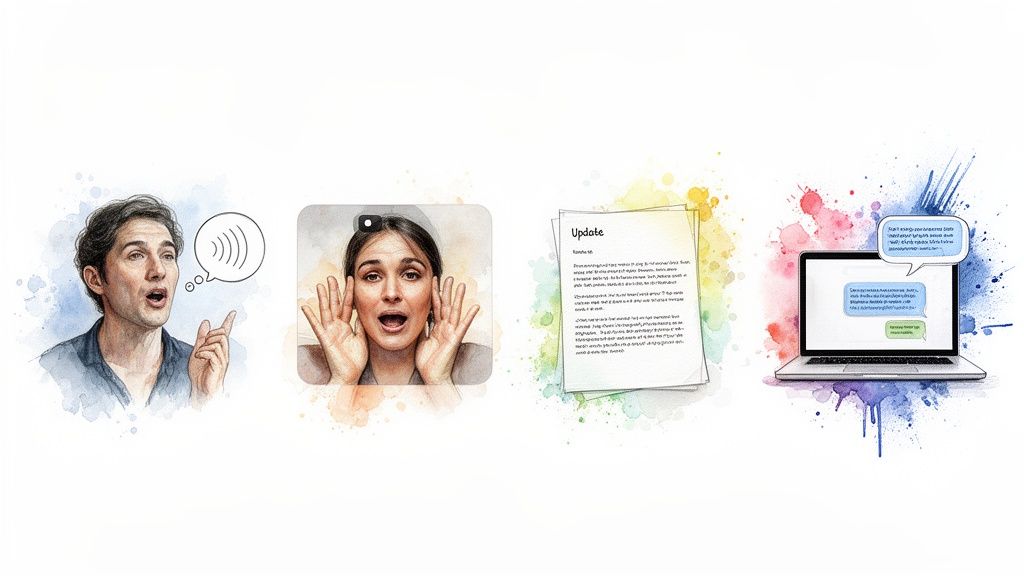
These four modes are the bedrock of every interaction you'll have at work, from a quick catch-up by the coffee machine to a formal company-wide announcement. Each has its own strengths, weaknesses, and unwritten rules.
Verbal and Nonverbal Communication
Verbal communication is the most immediate way we connect—it's the words you actually say. It’s perfect for brainstorming with a colleague, solving a problem on the fly, or giving quick, direct feedback. A five-minute chat can often clear up an issue that would otherwise take a dozen emails to resolve.
But your words are only part of the story. They're always accompanied by their silent partner: nonverbal communication. This is everything else—your body language, tone of voice, and facial expressions. On a video call, the way you sit and whether you make eye contact can scream confidence or boredom, often overpowering your words. In fact, some research suggests nonverbal cues can carry over 90% of a message's weight. That's a huge impact.
Written and Digital Communication
Written communication creates a paper trail. It's the go-to for things that need to be clear, precise, and documented, like project plans, formal reports, or critical policy updates. A well-written memo gets everyone on the same page, while a rambling one just creates more confusion.
This naturally leads us to digital communication, which has become the default for most of us. This bucket includes everything from quick Slack DMs and Microsoft Teams chats to formal emails and video conferences. It’s fast and incredibly convenient, but you lose the instant feedback you get when talking to someone in person. Tone is notoriously easy to misinterpret in a text or email, which is why being clear and concise is non-negotiable.
Choosing the right communication mode is strategic. A simple request that could be handled in a quick chat shouldn't clog up an inbox. Likewise, a major decision shouldn't be rushed through a series of instant messages.
Knowing how to navigate these digital channels is a must. For instance, running an effective video call is a core professional skill today. You can get a deeper dive on that in our guide to virtual meeting best practices.
Beyond just the mode, it’s also important to remember that people communicate differently. For a great breakdown, check out this guide on understanding different communication styles. The best communicators know how to adapt their approach not just to the situation, but to the person they're talking to.
The Real Business Cost of Bad Communication
Poor communication at work isn't just a minor annoyance; it's a financial black hole. When messages get scrambled, misunderstood, or simply don't get sent, the fallout hits the bottom line—hard. This friction grinds down productivity, stalls projects in their tracks, and quietly bleeds company resources.
Think this is just theory? The numbers tell a shocking story. U.S. businesses alone lose an estimated $1.2 trillion annually because of poor communication. Globally, a staggering 86% of all workplace failures can be traced back to communication breakdowns and a lack of collaboration.
It’s the number one reason projects go off the rails. It gets even worse: 63% of employees have considered quitting their jobs over it. If you want to dive deeper, check out this detailed workplace communication report.
From Misunderstanding to Financial Setback
Let’s make this real. Imagine a product development team gearing up for a huge launch. The engineering lead sends a quick email to the marketing team: "We're pushing the final feature integration to next week to ensure stability."
But that email gets buried. There’s no clear subject line, no call to action. It’s just one of a hundred other messages.
Oblivious to the delay, the marketing team plows ahead, launching a multi-thousand-dollar ad campaign. The ads go live, promising a shiny new feature that doesn't actually exist yet. The result? A complete mess. We're talking wasted ad spend, confused customers, public embarrassment, and a frantic, expensive scramble to clean it all up. One fuzzy email just cost the company a whole lot of money and trust.
A simple misunderstanding isn't just an "oops" moment. In business, it's a liability that can derail budgets, timelines, and customer trust in an instant.
The Hidden Costs Bleeding Your Business
Beyond those big, splashy failures, the true cost of bad communication is often hidden in plain sight. It’s a slow, steady drain that can be far more damaging over time.
These hidden costs show up in a few critical ways:
- Employee Turnover: People don't stick around where they feel unheard, confused, or left out. When morale sinks, they walk. Replacing an employee can cost anywhere from half to twice their annual salary.
- Wasted Time: How much of the day is spent re-explaining things? Teams lose countless hours clarifying murky instructions, fixing mistakes born from misunderstandings, and redoing work that wasn't coordinated properly.
- Stifled Innovation: The best ideas often die in silence. If there aren't clear, safe channels for people to share feedback or brainstorm, they’ll just keep their brilliant insights to themselves.
Ignoring communication issues is like choosing to accept these costs as "business as usual." But the smartest companies know that investing in clear communication isn't an expense—it's a direct investment in productivity, retention, and the bottom line.
Navigating Common Communication Barriers
Even when we have the best intentions, our messages can get lost, misunderstood, or just plain ignored. That’s because great workplace communication isn't just about what you say; it's about successfully getting past all the things that can go wrong. These barriers are like static on a radio, turning a clear signal into confusing noise and creating friction where you need collaboration.
Think of it like trying to have a serious conversation at a loud concert. It doesn’t matter how clearly you speak if the other person can't hear you over the chaos. The modern workplace is that noisy concert, packed with digital distractions, conflicting priorities, and tiny misunderstandings that can completely derail a project.
The stakes are high. How we communicate has a direct, measurable impact on the business's bottom line.
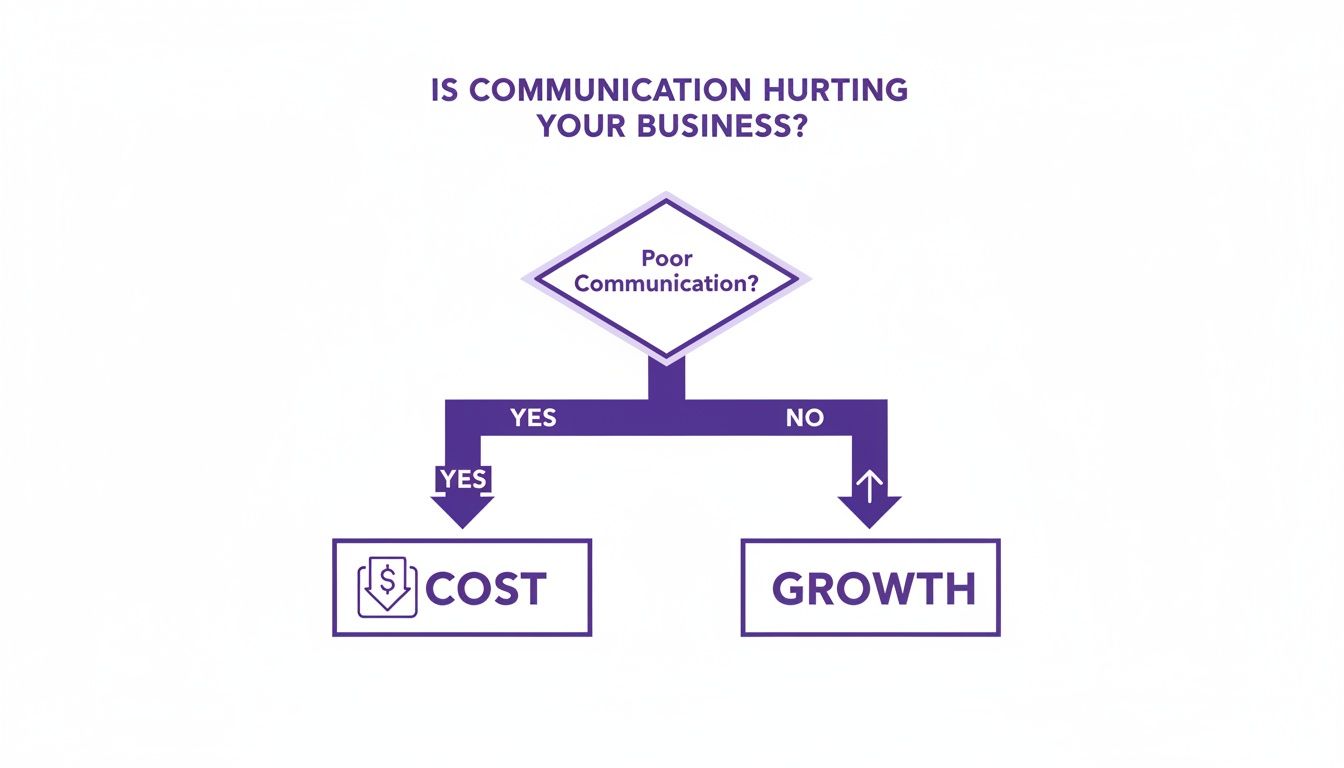
As you can see, the path forward is simple: fixing communication breakdowns fuels growth, while letting them slide leads to real, tangible costs.
Overcoming Information Overload
One of the biggest culprits today is information overload. We’re drowning in emails, Slack pings, and meeting invites. It’s almost impossible to focus on what actually matters. In fact, companies with around 100 employees can waste an average of 17 hours a week just trying to clarify confusing communication.
To cut through the noise, you need to be relentlessly clear and purposeful. Before you hit "send" on anything, ask yourself two quick questions:
- What is the one key takeaway for the other person?
- What, specifically, do I need them to do?
This simple mental checkpoint forces you to be direct and actionable, which shows you respect your colleagues' time. It’s about sending fewer messages, but making them count.
The Challenges of Remote and Hybrid Work
When we're not in the same room, we lose all those subtle nonverbal cues—the nod, the smile, the confused look—that give our words context. In a remote or hybrid setup, a delayed reply on Teams can feel like a snub, when really the person just stepped away to make coffee. This creates an emotional disconnect, where what you meant gets lost and what they perceived takes over.
To bridge this digital divide, you have to be more explicit. It often means you need to over-communicate a little. Kick off video calls with a few minutes of small talk to build that human connection. Use emojis or phrases that clarify your tone to stop misunderstandings before they start.
In a remote world, you can never just assume your message landed the way you intended. You have to be intentional about creating clarity and connection to fill the void left by physical presence.
Navigating Cultural and Personal Differences
Every office is a melting pot of different backgrounds, personalities, and communication styles. What one person sees as refreshingly direct, another might find abrasive and rude. If left unaddressed, these differences can create some serious tension.
Cultural misunderstandings are especially common, impacting everything from how people approach deadlines to the way they deliver feedback. Just being aware of these potential differences is a huge first step. For a much deeper dive into this, check out our guide on cross-cultural communication in business for more specific strategies.
Learning to spot and navigate these barriers is what turns communication from a daily frustration into your team’s greatest asset. It all comes down to being more intentional, empathetic, and strategic about how, when, and where you share information.
Actionable Do's and Don'ts for Daily Scenarios
Knowing the theory is one thing, but what happens when you’re in the middle of a hectic workday? That's when communication skills really get put to the test. The secret to navigating your day with confidence isn't about memorizing a textbook—it's about mastering a few simple rules for the situations you face constantly.
Think of this as your cheat sheet for handling meetings, emails, and tough conversations like a seasoned pro.
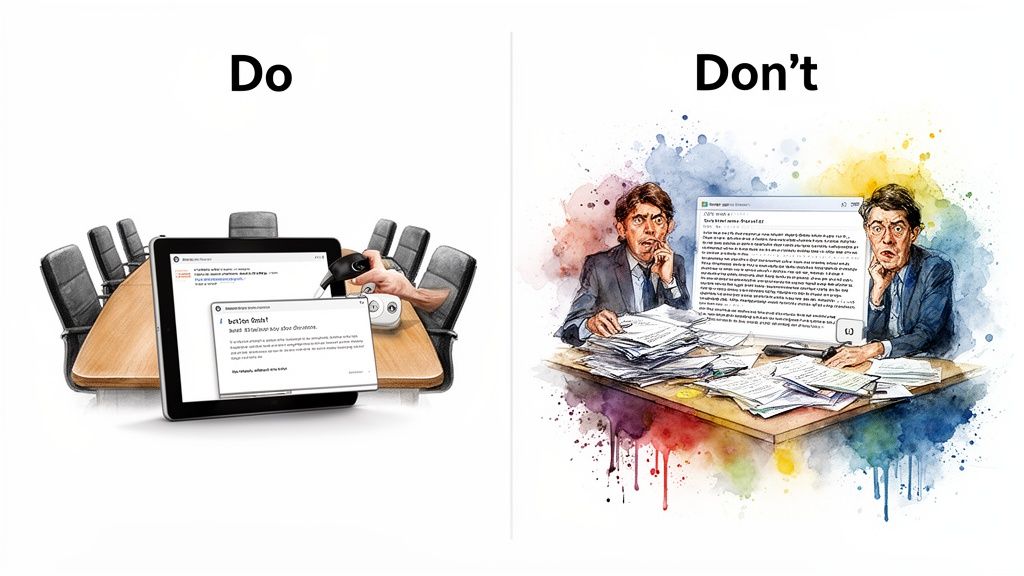
Let's break down the practical steps that turn messy interactions into clear, productive outcomes. The goal is to make every conversation count, whether it's a formal presentation or a quick Slack message.
Mastering Your Meetings
We've all been there: the meeting that could have been an email. Meetings can either be a powerful tool for progress or a black hole for everyone's time and energy. In fact, professionals can spend up to 17 hours a week just trying to clarify things that were left fuzzy—often from a poorly run meeting.
Making your meetings count is a non-negotiable skill. Here’s how to get it right:
- Do set a clear agenda. Send it out beforehand with the main topics and, most importantly, what you need to decide. This one simple step gets everyone on the same page before they even walk in.
- Don't invite everyone. Keep the list tight. Only include people who absolutely need to be there. Smaller groups mean more focused discussions and faster decisions.
- Do assign a facilitator. This person’s only job is to steer the conversation, watch the clock, and make sure everyone gets a chance to speak. It’s the best way to prevent one or two people from dominating the room.
- Don't end without clear next steps. Save the last five minutes to recap what was decided and who owns what. Everyone should walk out knowing exactly what they need to do next and by when.
Writing Emails That Get a Response
Your inbox is a constant battle for attention. If you want your messages to be read and acted on, you have to write with absolute clarity and purpose. A vague email creates delays and confusion; a great one moves things forward instantly.
Your email subject line is the most important part of your message. It's the gatekeeper that determines whether your email gets opened now, later, or never. Be specific and action-oriented.
Ready to level up your email game? Follow these simple rules:
Do:
- Write a specific, searchable subject line. Think "Project Phoenix Update: Feedback Needed by EOD Friday."
- Get straight to the point. Put your main request or key information in the very first sentence.
- Use bullet points and bold text to break up long chunks of text and draw the eye to what's important.
Don't:
- Write giant paragraphs that force people to hunt for the point.
- Jam multiple, unrelated topics into a single email thread.
- Use lazy subject lines like "Following up" or "Quick question."
Building these small habits can make a massive difference. For more hands-on strategies, you might find our guide on improving workplace communication skills useful.
Handling Difficult Conversations
Every so often, you have to disagree with a colleague, ask for help when you're stuck, or give someone tough feedback. These moments can feel awkward, but handling them with grace is the mark of a true professional.
A few simple phrases can help you navigate these tricky waters:
- To disagree respectfully: "I see your point, and I appreciate that perspective. Have we considered...?"
- To ask for help: "I'm working on [task] and would really value your expertise on [specific part]. Do you have 15 minutes to walk me through it?"
- To offer feedback: "I noticed in the client presentation that [specific observation]. For next time, it might be even more impactful if we [suggested action]."
These small shifts in language can turn a potentially tense moment into a positive and collaborative one.
Turn Communication Theory into Confident Practice
Knowing the principles of good workplace communication is a fantastic start. But let's be honest—real progress happens when that knowledge turns into action.
It’s one thing to read that you should be clear and concise. It’s a completely different ballgame to actually be clear and concise when you’re on a high-stakes client call or disagreeing with your boss. This is the gap where most training falls flat.
Think of it like this: reading a book about swimming won't keep you from sinking. You can understand the theory of buoyancy and different strokes, but you only learn to swim by getting in the water. Communication works the exact same way. True fluency and confidence come from practice, not just theory.
"Communication is not just a soft skill; it’s the linchpin of effective management."
That’s why a safe space to practice is so critical. To build the muscle memory for great conversations, you need a place to try, fail, and get feedback without any real-world consequences.
Bridge the Gap with AI-Powered Practice
This is exactly where TalkEasy comes in. Our AI platform gives you a judgment-free zone to practice the exact conversations you face at work. Whether you’re prepping for a team meeting, navigating a tough negotiation, or just want to get better at small talk, you can do it anytime, anywhere.
TalkEasy pushes you past passive learning by putting you into realistic scenarios. Instead of just reading tips, you’re actually in the conversation.
- Practice Real Scenarios: Rehearse anything from a project update to giving constructive feedback.
- Get Instant Feedback: Receive immediate, personalized suggestions on your clarity, tone, and delivery.
- Build Confidence Safely: Make mistakes and fine-tune your approach without any professional risk.
By turning theory into an active, repeatable exercise, you build the skills and the confidence to handle any workplace conversation that comes your way. It’s how abstract concepts become your natural, effective way of speaking.
Got Questions? We've Got Answers
Even when you know the principles of great communication, the real world always throws a curveball. Let's tackle some of the most common questions people have when they're trying to navigate their daily interactions at work.
Think of this as your quick-reference guide for those tricky situations where you need a practical answer, fast.
How Can I Communicate Better with My Manager?
It really boils down to two things: being proactive and being crystal clear. Don't wait for your manager to ask for an update; schedule regular, quick check-ins to make sure you're both aligned on what matters most.
When a problem pops up, try not to just drop it on their desk. Come prepared with a couple of potential solutions. This shows you’ve taken ownership and helps get things sorted out much faster.
And when you get feedback? Listen. Really listen. A simple trick is to repeat their main points back to them—"So, what I'm hearing is..."—to make sure you're on the same page. Oh, and keep your emails short and to the point.
What's the Best Way to Give Constructive Feedback?
Giving feedback that actually helps someone grow—without making them feel attacked—is an art. The key is to be specific, objective, and supportive. A great framework for this is the Situation-Behavior-Impact model.
- Situation: Pinpoint the exact time and place. ("During yesterday's client call...")
- Behavior: Describe what you saw or heard, sticking to facts. ("...I noticed we jumped in a few times while the client was speaking.")
- Impact: Explain the result of that behavior. ("...and I'm worried we might have missed some of their feedback.")
Always, always have these conversations in private. Frame it as teamwork by ending with something like, "How can we tackle this differently next time?" It turns a critique into a collaborative plan for improvement.
How Is Communication Different for Remote vs. In-Office Teams?
With remote teams, you have to be much more deliberate. You can't rely on body language or those quick "drive-by" conversations, so your written communication carries all the weight. This means clarity and tone are everything. You almost have to over-communicate just to make sure everyone is truly in the loop.
Back in the office, you get the benefit of spontaneous chats and can easily read the room. But that comes with its own challenge: constant interruptions. For teams that mix both, the goal is to create a system where remote folks feel just as included and informed as the people physically in the room.
Ready to stop just reading about communication and start practicing it? TalkEasy gives you a safe, AI-powered space to run through real-world work conversations, from team meetings to tough client calls. Build the speaking skills you actually need, starting today at https://www.talk-easy.com.